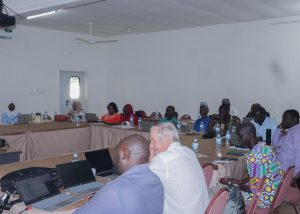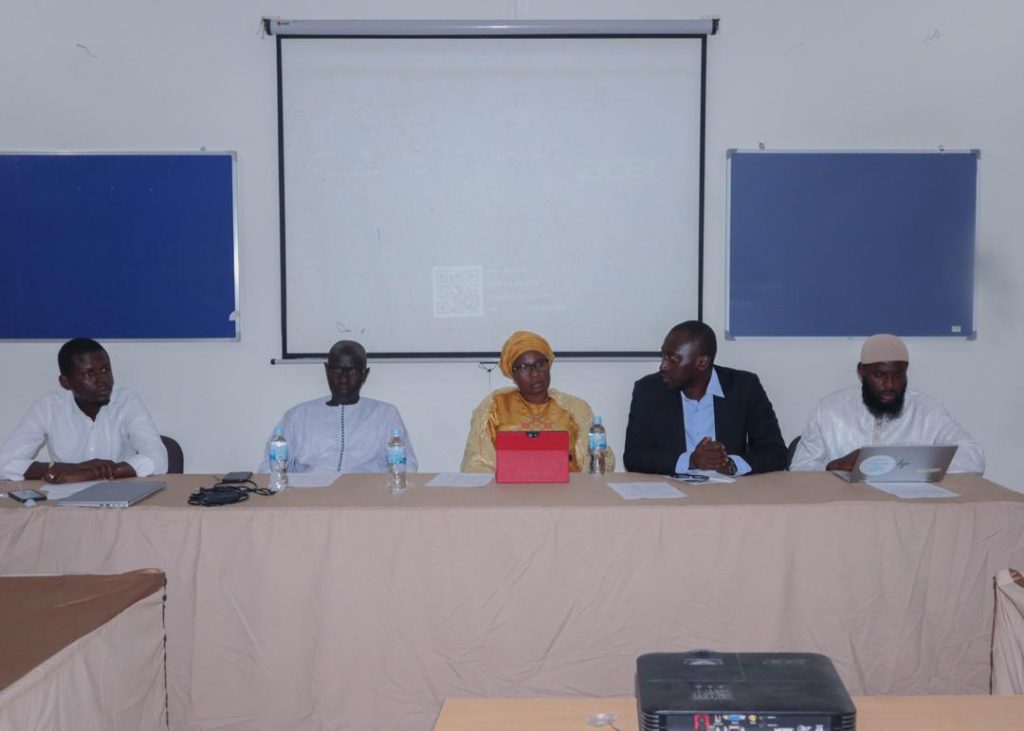
The Ministry of Lands, Regional Government and Religious Affairs, with support from the World Bank through the West Africa Coastal Areas (WACA) Project under the Ministry of Environment, on Thursday, 25 August 2026, held a validation workshop on the draft National Resettlement Policy.
The workshop, held at the National Nutrition Agency (NaNA), brought together relevant stakeholders to review and validate the draft policy, which seeks to establish a clear framework for managing the relocation of people affected by development projects.
The National Resettlement Policy is aimed at ensuring inclusive, transparent and participatory relocation processes for affected persons. It focuses on improving or restoring living standards, providing livelihood assistance and protecting vulnerable groups.
The Permanent Secretary at the Ministry of Lands, Regional Government and Religious Affairs, Ndey Marie Njie, described the policy as a significant milestone for The Gambia, noting that it would be the country’s first National Resettlement Policy, covering the period 2027 to 2036.
“We continue to pursue infrastructural development, urban expansion, other development interventions, land acquisition, and the displacement of people and livelihoods,” PS Njie said.
She explained that the draft policy had undergone extensive consultations at national, regional and community levels, involving relevant stakeholders.
“The contributions from these important stakehold- ers assisted in shaping the draft National Resettlement Policy. The draft therefore seeks to establish a clear and consistent national framework for managing involuntary resettlement,” she said.
PS Njie also highlighted some of the long-standing challenges associated with resettlement, including inadequate or delayed compensation, weak coordination among institutions, limited stakeholder participation and inadequate mechanisms for addressing grievances.
She stressed that the central principle of the policy is that where displacement cannot be avoided, affected persons must be treated fairly, compensated at full replacement value and supported to restore or improve their livelihoods.
The Social Development Specialist at the World Bank Country Office, Lamin Darboe, said the govern- ment has a responsibility to safeguard the rights and dignity of citizens affected by development projects.
He also highlighted the role of non-governmental
organisations and other development actors in supporting development, creating employment, providing essential services and improving living conditions.
“We need to open up the space for grievance mechanisms so that people along the line, when they are still aggrieved, can have the opportunity to reach out and have their interests served,” Mr Darboe said.
He noted that while the Ministry of Lands provides the platform for articulating the policy, stakeholders, development partners and the private sector also have a responsibility to ensure that the framework provides a fair process that responds to the needs of vulnerable groups.
According to Mr Darboe, the policy should ensure that people who are most at risk of being negatively affected by development projects are not overlooked.
The Social Development Specialist of the WACA Project, Haruna Cham, said the proposed policy would address a significant gap in The Gambia’s regulatory framework.
He explained that although numerous development projects are being implemented, the country currently lacks a comprehensive resettlement framework to guide such projects where displacement is involved.
“If you go to the World Bank, they have policies and regulations that are very fitting for all development projects that they want to implement in countries, but I think some of the gaps that we have in The Gambia include not having a resettlement policy,” Mr Cham said. He added that the adoption of a national resettlement policy would enable the government to assess proposed development projects and determine whether they could
have resettlement implications.
Mr Cham further said the policy comes at an important time as the government works towards implementing the National Land Policy.
He explained that implementation frameworks are currently being developed at the ministry level and that a resettlement policy would contribute significantly to the effective management of the country’s land resources.
The Ministry of Lands, Regional Government and Religious Affairs remains committed to working with relevant stakeholders to establish an effective and efficient national resettlement framework that protects affected communities while supporting sustainable national development.